
우리 서비스가 필요한 이유는 프로젝트가 제대로 수행되고 기능하는지 확인할 수 있는 전문 지식과 경험을 갖춘 고도로 자격을 갖춘 전문가를 확보하고 있다는 것입니다.
As large generative AI models transition from training to large-scale inference deployment, the exponential growth in computing power demands is pushing chip power consumption to unprecedented levels. NVIDIA’s next-generation Rubin GPU already consumes 2,850 W of power, while the Rubin Ultra version exceeds 3,000 W. Power consumption at this level is no longer merely “heat generation” in the traditional sense, but rather approaches the extreme state of “combustion”—traditional air-cooling solutions fail, and FR-4 organic substrates are prone to melting and warping at high temperatures, making it difficult to ensure the integrity of high-frequency signal transmission.
The explosive growth in AI computing power requires, on the one hand, a stable and abundant power supply and cooling systems, and on the other hand, support from underlying materials such as high-purity electronic chemicals and advanced ceramic packaging. Against this backdrop, high-thermal-conductivity ceramic substrates have gone from being an “option” to a “necessity.” By 2025, the global ceramic substrate market had reached 3.29 billion yuan, with a compound annual growth rate of 18.69 percent, and is projected to climb further to between 18 and 20 billion yuan in 2026.
AlN: An Indispensable Strategic Basic Material in the Field of AI Computing
Among the many ceramic substrate materials, AlN stands out for its outstanding overall performance. Traditional resin substrates have a thermal conductivity of less than 1 W/m·K, whereas AlN ceramics can achieve thermal conductivities of 170–230 W/m·K, representing a 300- to 500-fold improvement in performance. Furthermore, the coefficient of thermal expansion of aluminum nitride closely matches that of silicon chips, effectively reducing the risk of stress-induced deformation and packaging failure under thermal cycling.
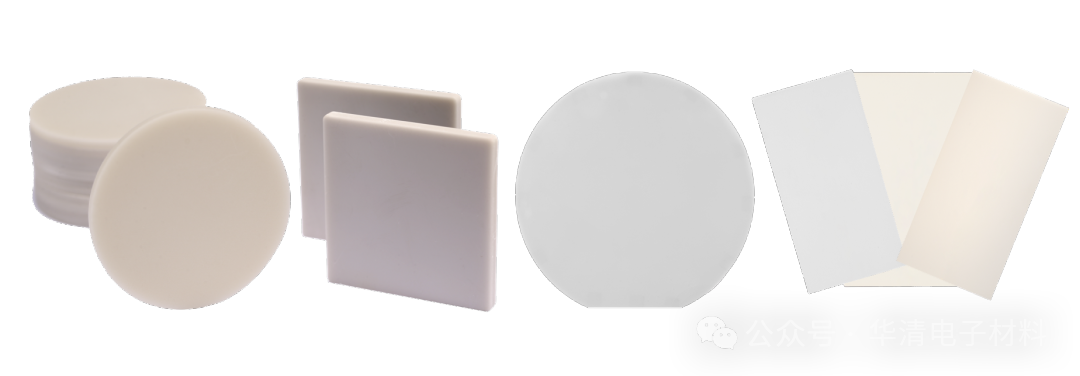
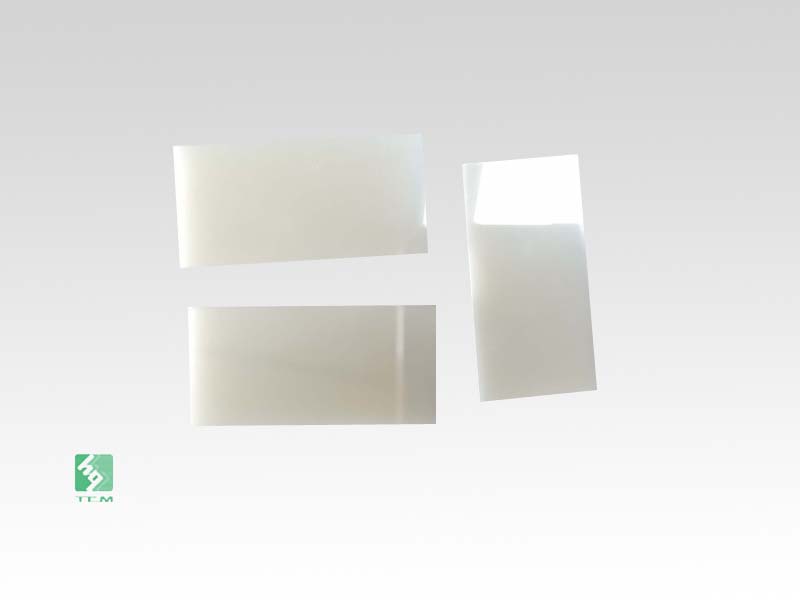
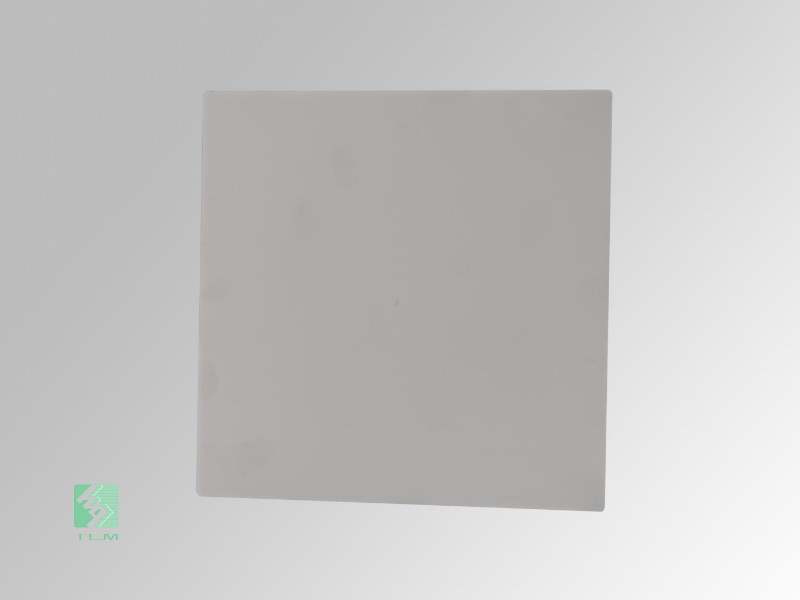
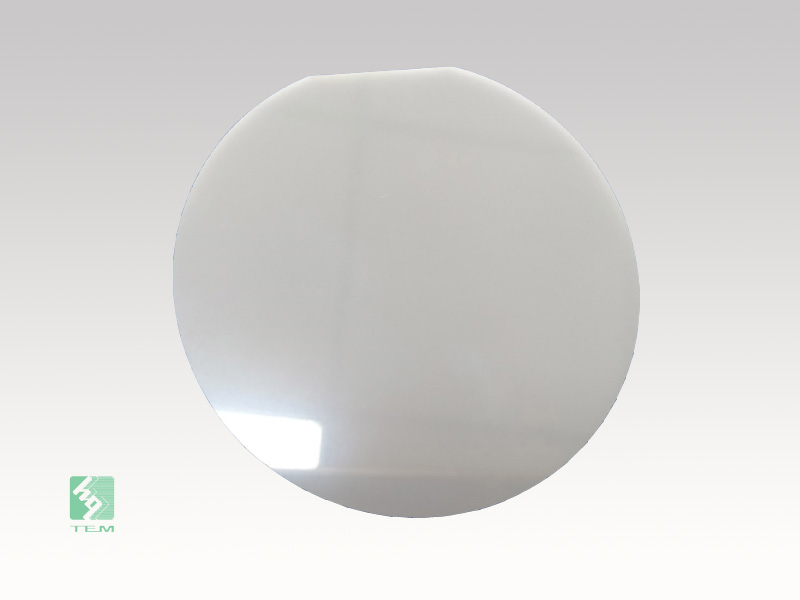
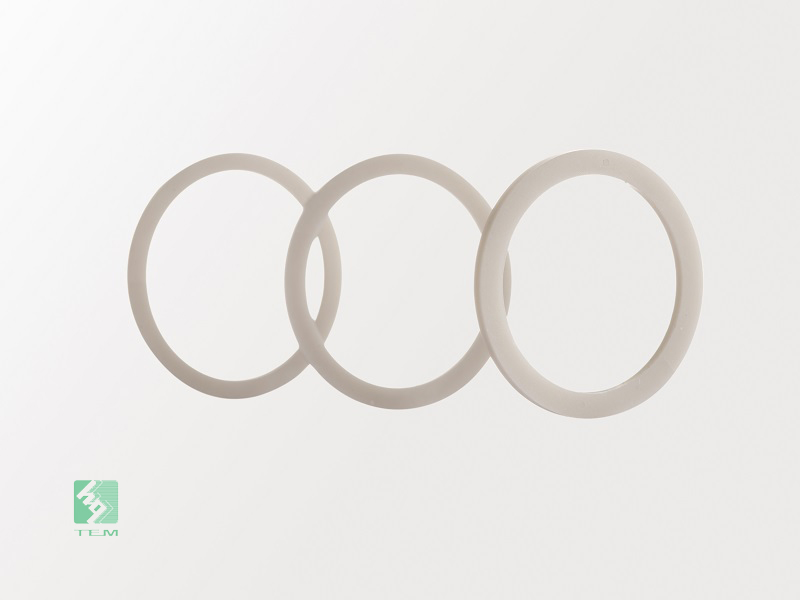
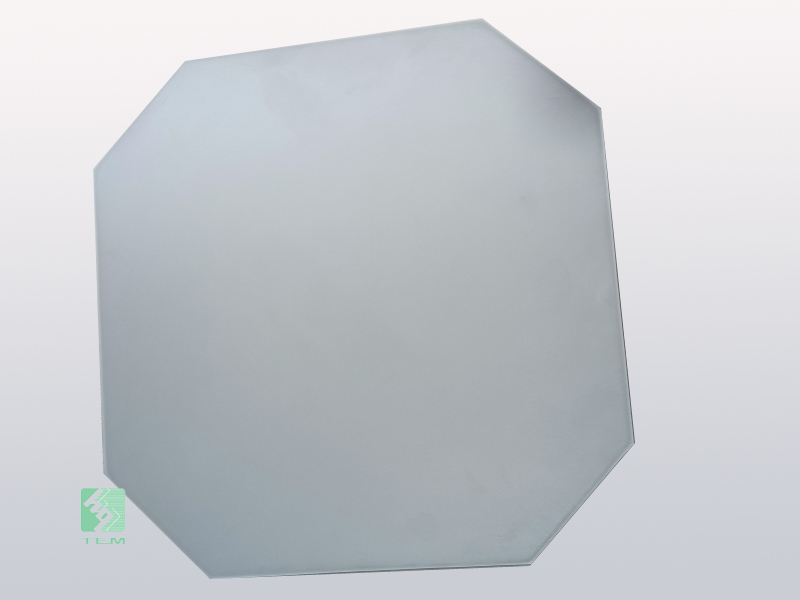
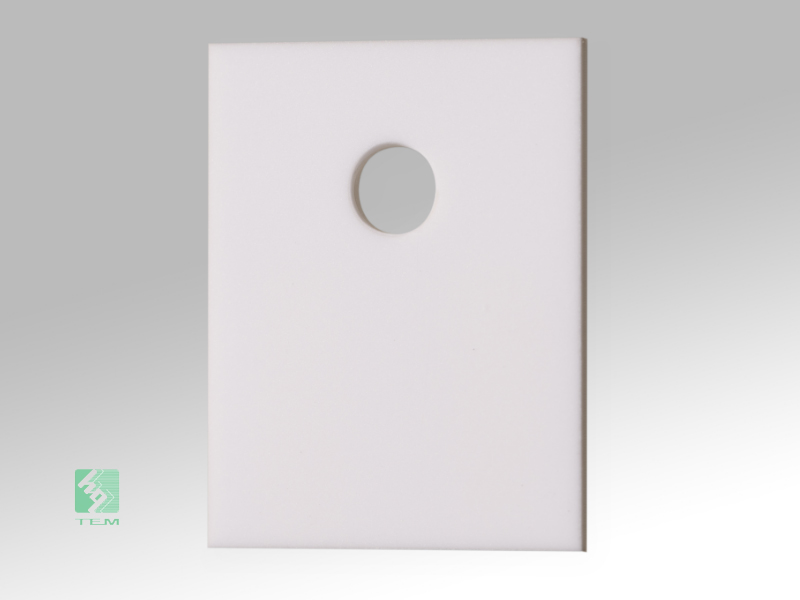
AlN Ceramic Substrate of Fujian Huaiqng Electronic Material
In AI servers and GPU clusters, liquid cooling combined with ceramic substrates has become the standard cooling solution, and the amount of ceramic substrate used per unit has increased significantly. Currently, ceramic substrates account for nearly 30% of AI server boards, replacing traditional PCBs, and this proportion is expected to continue growing as chip power consumption increases.
High-speed optical modules represent another core application scenario. As data centers evolve from 400G to 800G, 1.6T, and even 3.2T, the power consumption and thermal density of optical modules are rising sharply in tandem—the DSP power consumption of 800G optical modules has already reached 25–30 W, with a thermal density of approximately 60 W/cm². Aluminum nitride ceramic substrates can keep the junction temperature of optical chips below 60°C, offering more than five times the heat dissipation efficiency of traditional substrates and reducing signal transmission loss by 40% compared to FR-4 substrates. According to estimates, the total market size for ceramic components in the optical module sector will reach approximately 13.5 billion yuan in 2026 and is expected to surge to between 20.0 billion and 22.0 billion yuan by 2027.
Fujian Huaqing Electronic Material: A Chinese Force Among the World’s Top Tier
In this AI-driven revolution in thermal management materials, Fujian Huaqing Electronic Material—the pioneer and leader in aluminum nitride ceramics in China—is securing a place among the global frontrunners with its independently developed and mass-produced high-thermal-conductivity aluminum nitride ceramic substrates.
As China’s first high-tech enterprise to engage in large-scale production of aluminum nitride ceramic substrates, Fujian Huaqing Electronic Material has, through continuous R&D efforts, successfully increased the thermal conductivity of its products from 170 W/m·K to over 230 W/m·K and raised their flexural strength from 350 MPa to over 600 MPa. The thermal conductivity of its mass-produced products ranges from 170 to 230 W/m·K, combining high insulation, low thermal expansion, high-voltage resistance, and wide-temperature-range performance. The company has established a complete industrial chain encompassing “aluminum nitride ceramic powder—ceramic substrates/precision ceramics—ceramic metallization.”
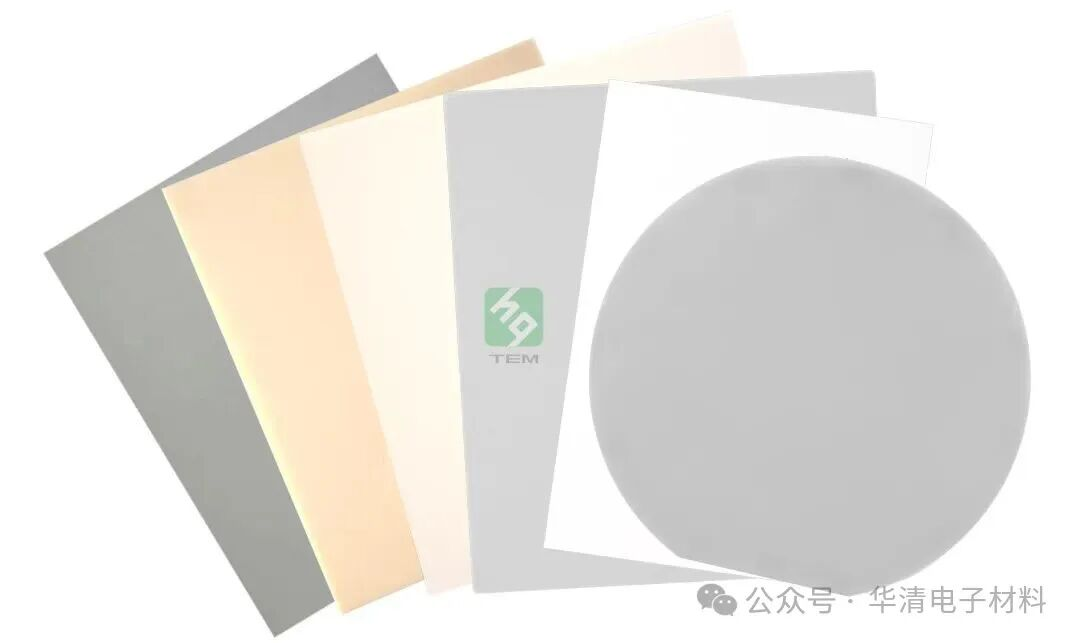
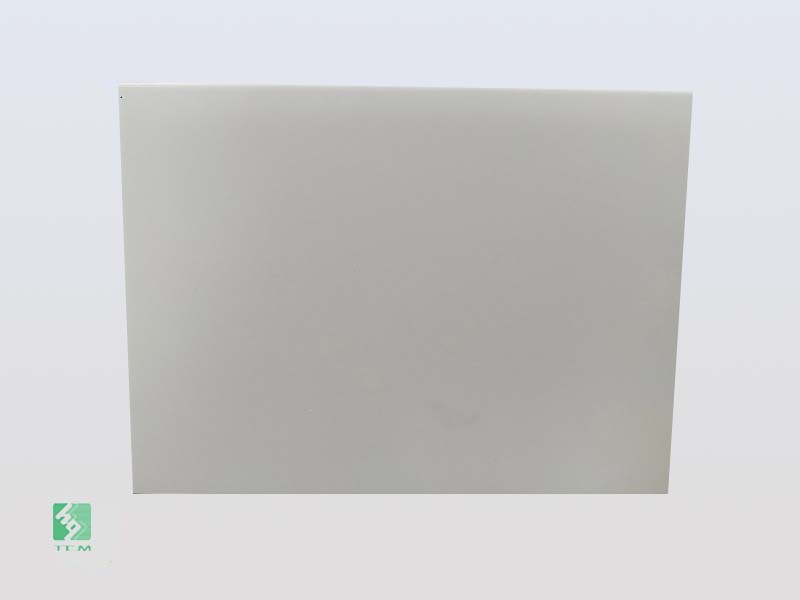
High Thermal Conductivity Product of Fujian Huaqing Electronic Material
Thanks to this technological breakthrough, Fujian Huaqing Electronic Material has succeeded in replacing imported high-end aluminum nitride ceramic substrates, effectively resolving “bottleneck” issues in fields such as semiconductor packaging and power modules. The company has been recognized as a national-level “Key Little Giant” enterprise under the Specialized, Refined, Distinctive, and Innovative (SRI) program and as a national-level “Single Champion” enterprise in the aluminum nitride ceramics sector. It holds more than 200 patents and has reduced costs by approximately 25% compared to imported materials. In terms of market performance, the company has consistently ranked first in the domestic market and among the top three globally for many years.
From “Domestic Substitution” to “Global Export”
Currently, the global market for high-end ceramic substrates is undergoing profound changes. Japanese companies have long dominated the market, with Japan monopolizing more than 70 percent of global production capacity for high-end aluminum nitride powder. However, exports of yttrium oxide—a key raw material for aluminum nitride production—to Japan have been restricted, and industry inventories are running low, creating a critical window of opportunity for domestic substitution in high-end ceramic substrates.
Against this backdrop, Fujian Huaqing Electronic Materials—leveraging its proprietary technological breakthroughs, large-scale production capacity, and ongoing cost optimization capabilities—has not only achieved domestic substitution but has also laid the foundation for competing in the global market. From LED packaging, 5G communications, and power modules, to new energy vehicles and photovoltaic energy storage, and on to today’s cutting-edge fields such as AI computing infrastructure and low-altitude aviation, Huaqing Electronics’ aluminum nitride ceramic substrates are playing an irreplaceable role in an ever-increasing number of high-end applications.
The ultimate limit of AI lies in computing power; the bottleneck of computing power is heat dissipation; and the solution to heat dissipation is hidden within one unassuming ceramic substrate after another—Fujian Huaqing is forging China’s solution amid this revolution in foundational materials.
우리 서비스가 필요한 이유는 프로젝트가 제대로 수행되고 기능하는지 확인할 수 있는 전문 지식과 경험을 갖춘 고도로 자격을 갖춘 전문가를 확보하고 있다는 것입니다.
무료 상담을 원하시면 양식을 작성하여 bg를 시작하십시오.:
받은 편지함에서 판매 정보, 뉴스 및 업데이트를 수신합니다.

 闽ICP备19012761号-1